In the competitive world of packaging, film, and plastic manufacturing, ensuring material toughness is non-negotiable. Product failures during transit or use are costly and damage brand reputation. To quantify and guarantee impact resistance, industry professionals rely on precise, reliable equipment. This guide delves deep into the Electronic Pendulum Impact Tester, explaining its advanced workings and providing a clear framework for selecting the perfect instrument for your lab.
Beyond the Swing: How a Modern Electronic Pendulum Impact Tester Works
While the fundamental principle of a pendulum impact test—measuring the energy lost by a swinging hammer to fracture a sample—remains constant, electronic systems have revolutionized data accuracy and usability. Unlike older, manually-operated Pendulum Impact Testing Machines, an electronic version transforms the test from a simple measurement into a sophisticated data acquisition process.
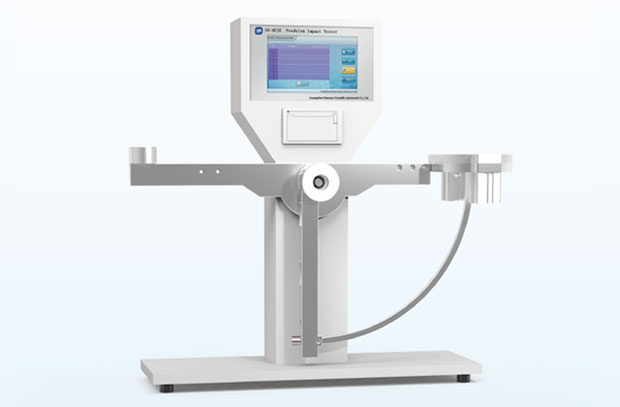
Here’s a breakdown of its core working principle:
Sample Mounting & Configuration: A notched or unnotched specimen is securely clamped in the machine's vice. The test type (Charpy or Izod) and sample geometry are selected according to standards like ISO 179 or ISO 180.
Pendulum Release & Impact: The motorized or manually-lifted pendulum is released from a pre-defined height. It swings down in a controlled arc, striking the sample with a precise amount of kinetic energy.
Advanced Energy Measurement (The Key Difference): This is where the Electronic Pendulum Impact Tester excels. Instead of relying on a mechanical dial gauge, it employs high-resolution optical encoders or sensors on the pendulum shaft. These sensors precisely measure the pendulum's angle and velocity before and after impact.
Instantaneous Data Calculation: The embedded microprocessor instantly calculates the energy absorbed by the sample using the velocity difference. The formula, derived from the change in potential energy, is handled seamlessly by the software.
Comprehensive Data Output: Results, including impact strength (in kJ/m² or ft-lb/in), absorbed energy, and often graphical force-time curves, are displayed on a digital touchscreen. Data can be exported for statistical analysis and reporting, crucial for QC documentation and achieving ISO 179/ISO 180 Certified Impact Tester status for your laboratory.
This electronic methodology eliminates parallax errors, improves repeatability, and provides rich, digital data that manual machines cannot match.
Your Strategic Buying Guide: Choosing the Right Pendulum Impact Tester
Selecting a Pendulum Impact Tester for Packaging and other materials requires more than just checking specifications. Consider this step-by-step guide to make an informed investment.
1. Define Your Application and Standards Compliance:
Primary Material: Are you testing rigid plastics (e.g., PVC pipes), flexible packaging films, composite materials, or finished components? This determines the required energy range.
Key Standard: Your industry mandate is critical. Ensure the tester is fully compliant with ISO 179 (Charpy), ISO 180 (Izod), ASTM D256, ASTM D4812, or other relevant standards. A true ISO 179/ISO 180 Certified Impact Tester will come with a certificate of verification from the manufacturer.
2. Evaluate Critical Technical Features:
Energy Range & Hammer Selection: Choose a model with multiple pendulum hammers (e.g., 0.5J, 2J, 7.5J, 25J, 50J) to cover a wide range of sample strengths without over-testing. A system with easy, tool-less hammer change is a significant time-saver.
Data System & Software: Prioritize testers with intuitive, menu-driven software. Look for features: automatic calculation of mean and standard deviation, statistical analysis, customizable report generation, and direct data export to USB or LAN.
Accuracy & Calibration: Investigate the measurement resolution. The system should offer automated calibration routines and come with traceable calibration certificates. Electronic systems should have auto-zero and drift-check functions.
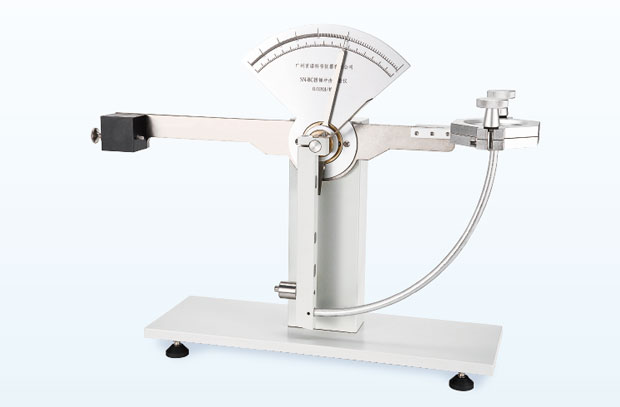
Safety & Ergonomics: Essential features include a safety guard with an automatic locking mechanism, a sturdy base to minimize vibration, and a clear, well-lit testing area.
3. Prioritize Usability and After-Sales Support:
Sample Fixturing: Check if the vice and supports are robust, easy to align, and designed for your typical sample size. Quick-change fixtures enhance productivity.
Supplier Reputation: Opt for manufacturers specializing in material testing, not just general lab equipment. They provide better application knowledge.
Service & Support: Verify the availability of installation, training, preventative maintenance contracts, and local technical support. Ensure spare parts (like striking edges and sample notchers) are readily available.
4. Understand Total Cost of Ownership (TCO):
The initial price is one factor. Consider long-term costs related to maintenance, calibration, training, and potential downtime. A robust, well-supported Electronic Pendulum Impact Tester, though potentially a higher upfront investment, often delivers a lower TCO through years of reliable, trouble-free operation.
Conclusion
An Electronic Pendulum Impact Tester is a cornerstone instrument for any serious quality control or R&D lab in the materials sector. By moving from mechanical guesswork to electronic precision, it provides the defensible data needed to improve formulations, validate production batches, and prevent field failures. When selecting your system, align its capabilities with your specific standard requirements, material types, and workflow needs. Investing in the right instrument not only secures compliance but also builds a foundation for superior product durability and market trust.
FAQs
Q: Can one Electronic Pendulum Impact Tester handle both films and rigid plastics?
A: Yes, but you must select a model with a wide, multi-hammer energy range. Low-energy hammers (e.g., 0.5J) are for films and thin sheets, while high-energy hammers (e.g., 50J) are for rigid plastics. Ensure the sample clamps are adaptable.
Q: Why is electronic data capture better than a dial readout?
A: It removes operator interpretation error, allows for sophisticated data analysis and trending, and creates an automatic, auditable digital trail for quality certification.
Q: Is operator training extensive for an electronic model?
A: Modern units are designed for simplicity. While understanding the test standard is crucial, the actual machine operation via touchscreen menus is often more straightforward than manually reading and calculating results from a dial.
Solvent Moisture Tester: Hidden Moisture Control for Flexible Packaging & Pharma Compliance
07.09.2026
Water Vapor Transmission Rate Tester: Stop Moisture Damage, Extend Shelf Life
31.08.2026
Coefficient of Friction Tester: The Complete Guide to COF Testing for Packaging, Food & Pharma
24.08.2026
Flexible Packaging Compression Testers: Strategic QA for Global Markets
17.08.2026


