In packaging quality control, seal integrity and physical strength are the two fundamental indicators for determining packaging completeness. In response to different testing requirements, three specialized instruments have emerged on the market: the seal tester, the leak and seal strength tester, and the bag compression tester. Although similar in name and overlapping in functionality, they differ essentially in test principles, applicable scenarios, and data output. Correctly distinguishing their respective functional boundaries is a prerequisite for developing reasonable testing plans and avoiding duplicate equipment purchases or insufficient functionality.
The core function of the seal tester is to qualitatively determine whether a package has leaks. This instrument operates on the negative pressure (vacuum) method principle: the specimen is placed under water in a vacuum chamber, and vacuum is applied to create a pressure differential between the inside and outside of the package. If there are through defects, internal gas escapes and forms visible bubbles; if no bubbles appear, the package is judged to be properly sealed.
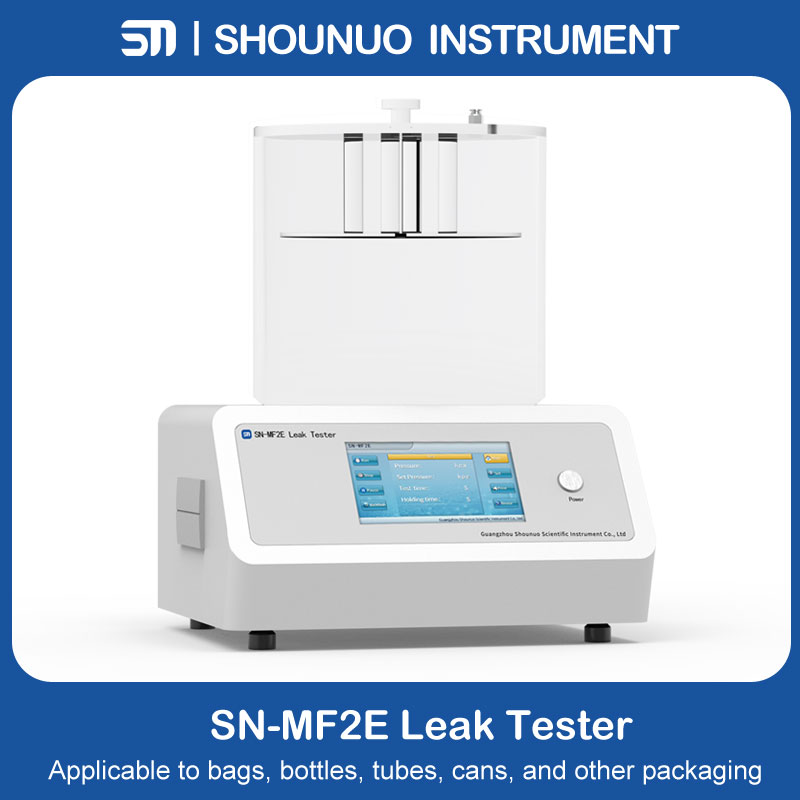
This instrument answers the binary question of "leak or no leak," with results depending on visual observation, making it a qualitative screening tool. It is easy to operate and cost-effective, making it suitable for online or offline batch sampling of high-volume products, but it cannot quantify leak rates. Applicable standards include GB/T 15171, ASTM D3078, and others.
The leak and seal strength tester operates on the positive pressure method and can simultaneously output two sets of quantitative data: leak rate and burst strength. During testing, gas at a preset pressure is charged into the package and held, with the leak rate calculated from pressure decay; the pressure is then increased continuously until the package ruptures, and the peak pressure at the moment of rupture (burst strength) is recorded.
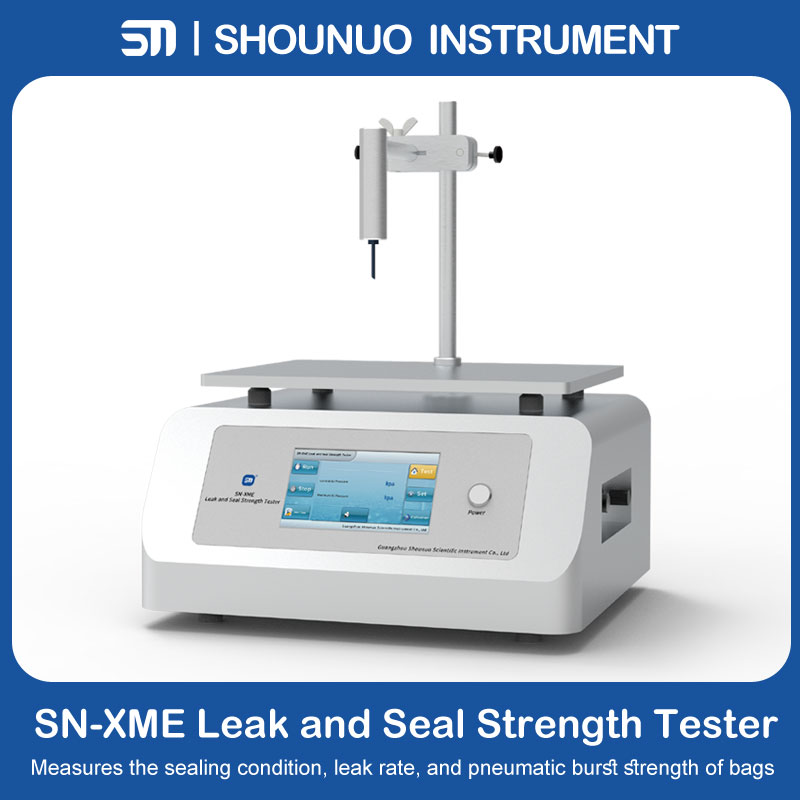
Compared with the seal tester, its advantages include: ① provision of quantitative data, making results traceable and comparable; ② support for multiple test modes such as burst testing and creep testing; and ③ suitability for flexible packaging, rigid packaging (bottles, cans, tubes), and medical device packaging. The pressure range of this instrument is typically 0–600 KPa, extendable to 1.6 MPa, making it an essential testing tool for sterile packaging and pharmaceutical packaging under GMP and FDA frameworks.
The testing target of the bag compression tester is not seal performance, but rather the compressive mechanical strength of the packaging material. The instrument applies external pressure to the specimen through upper and lower parallel platens, simulating compressive loads encountered in warehouse stacking and transportation handling, and measures the specimen's compression resistance.
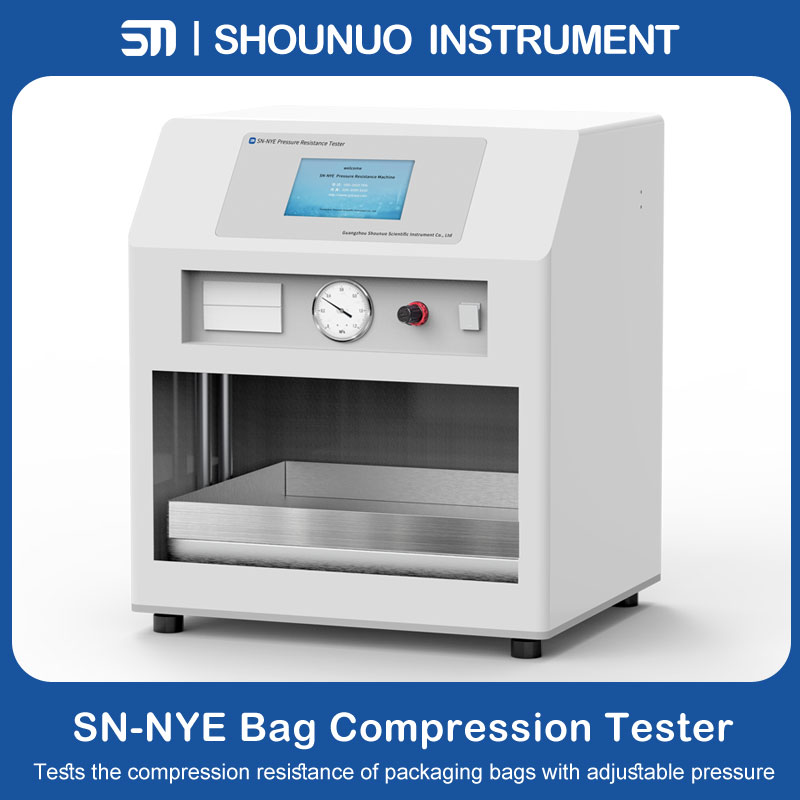
This instrument answers the question of "how much external pressure it can withstand," rather than "whether it leaks." Its test results can indirectly reflect the seal reliability of the sealing area under loaded conditions, and it has important reference value for packaging products that require multi-layer stacking or long-distance transport.
|
Aspect
|
Seal Tester
|
Leak and Seal Strength Tester
|
Bag Compression Tester
|
|---|---|---|---|
|
Test Principle
|
Negative pressure method (vacuum)
|
Positive pressure method (pressurization with gas)
|
External pressure loading
|
|
Output Result
|
Qualitative (bubble presence/absence)
|
Quantitative (leak rate + burst pressure)
|
Quantitative (compression resistance value)
|
|
Core Question
|
Leak or no leak?
|
How much leak? How much strength until break?
|
How much pressure can it withstand?
|
|
Applicable Packaging
|
Various flexible and rigid packages
|
Flexible, rigid packages, and medical device packaging
|
Stand‑up pouches, three‑side seal bags, etc.
|
|
Application Scenario
|
Recommended Equipment
|
Rationale
|
|---|---|---|
|
Routine online spot checking of products, only needing to determine pass/fail leakage
|
Seal tester
|
Low cost, high efficiency, low operator skill requirement
|
|
Aseptic packaging, pharmaceutical packaging, and other applications requiring quantitative seal strength and leak rate data
|
Leak and seal strength tester
|
Provides quantitative data, capable of detecting micro‑leaks
|
|
Packaging products that will be stacked and transported in cartons/pallets
|
Bag compression tester
|
Simulates compressive loads encountered in warehousing and transit
|
|
Comprehensive testing for products with high quality requirements
|
Combination of all three equipment types
|
Each serves its own purpose, covering the complete testing chain
|
A recommended combined configuration for the three types of instruments is: the bag compression tester is used for incoming material and packaging material receipt inspection; the seal tester is used for rapid online batch sampling on the production line; and the leak and seal strength tester is used for weekly batch process validation. Together, the three form a complete quality inspection chain from material incoming to finished product outgoing.
The seal tester uses the negative pressure method for rapid qualitative screening, the leak and seal strength tester uses the positive pressure method for quantitative seal evaluation, and the bag compression tester uses external loading to determine compressive strength. The essence of selection is function matching guided by testing objectives—once the question to be answered is clarified, the appropriate instrument category can be determined. Within budget constraints, a reasonable combination of the three types of instruments can provide the most complete technical assurance for packaging quality control.
Solvent Moisture Tester: Hidden Moisture Control for Flexible Packaging & Pharma Compliance
07.09.2026
Water Vapor Transmission Rate Tester: Stop Moisture Damage, Extend Shelf Life
31.08.2026
Coefficient of Friction Tester: The Complete Guide to COF Testing for Packaging, Food & Pharma
24.08.2026
Flexible Packaging Compression Testers: Strategic QA for Global Markets
17.08.2026


