In many packaging converting plants, solvents are treated as a bulk input. A batch is accepted if the color looks right, the viscosity is within range, and the supplier certificate says “passed.” Moisture is rarely part of that incoming inspection routine. Yet in the technical support work carried out by Guangzhou Shounuo Scientific Instruments Co., Ltd., moisture in solvents is consistently identified as one of the most frequent root causes behind lamination delamination, inconsistent print quality, retained solvent failures, and seal-strength drift in pharmaceutical packaging.
A solvent moisture tester is therefore not a peripheral laboratory accessory. For flexible packaging converters, pharmaceutical packaging manufacturers, and food-grade laminate suppliers, it functions as a risk-management instrument. It converts a hidden variable into a measurable, controllable and auditable quality parameter. This article outlines what a solvent moisture tester measures, why solvent moisture creates costly failures in different packaging structures, how regional regulatory expectations influence testing requirements, and how to select a solvent moisture analyzer suitable for both quality control and compliance.
A solvent moisture tester determines the water content in organic solvents, solvent blends, solvent-based inks, coatings, adhesives, diluents, and recovered solvent streams. The most accurate and widely accepted technique for packaging applications is Karl Fischer titration, which is specific to water and can detect moisture from low ppm levels up to percentage concentrations.
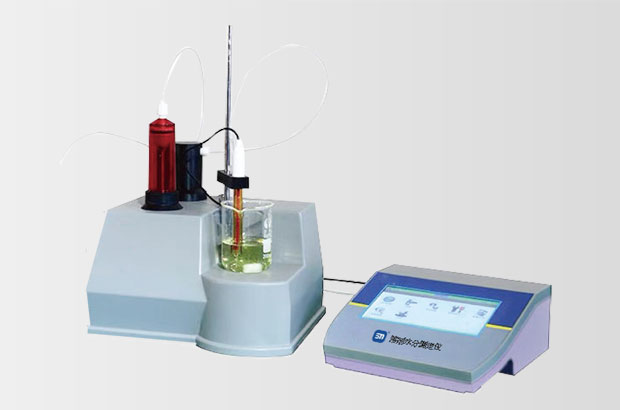
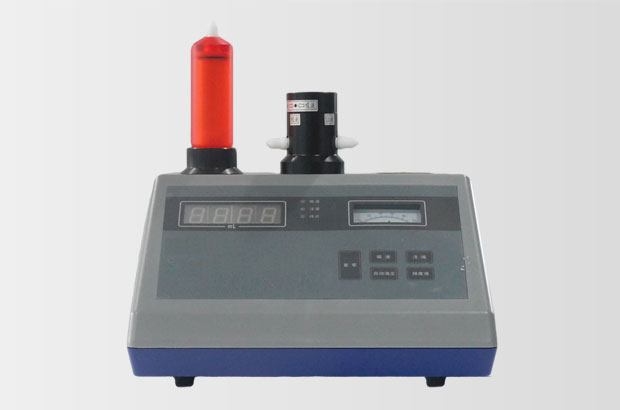
Two configurations are commonly deployed. Coulometric Karl Fischer moisture testers are designed for very low moisture content, typically below 0.1% or 1,000 ppm, and are frequently used for incoming solvent release in pharmaceutical packaging and high-end retort laminate production. Volumetric Karl Fischer moisture testers are more suitable for higher moisture ranges, often applied to solvent blends, wash-up solvents, and recycled solvent monitoring in flexographic or gravure printing.
Loss-on-drying and halogen moisture analyzers may appear to be lower-cost alternatives, but they often over-report or under-report water in solvent systems because they also measure other volatile components. For a packaging QC laboratory that requires defendable, audit-ready data, a Karl Fischer moisture tester for solvents remains the reference method, aligned with ISO 760, ASTM E203 and USP <921>.
It is important to recognize that solvent moisture is not a fixed “wet” or “dry” value. It is a process variable. A solvent that is within specification on Monday can be out of specification on Thursday because a drum was left open in a high-humidity production hall, or because a recovery distillation loop accumulated water over repeated cycles. Regular monitoring with a solvent water content tester is the only way to capture this variability before it affects production.
Moisture in solvents causes different failure modes depending on the packaging structure and process. Understanding these mechanisms helps justify the placement of a solvent moisture analyzer at incoming inspection rather than only in the final laboratory.
In solvent-based dry lamination, polyurethane adhesives react with isocyanate curing agents to form a strong bond. Water competes directly with this reaction. When the solvent or adhesive system contains excessive moisture, the isocyanate is partially consumed by water, leaving insufficient curing agent for the adhesive polymer network. The consequence is not always immediate. A laminate may appear acceptable after slitting but later exhibit low bond strength, delamination under retort or hot-fill conditions, gas bubbles, or elevated retained solvent levels because curing is incomplete. A solvent water content tester used before mixing can prevent these failures by allowing the QC team to reject or dry the solvent before it enters production.
In solvent-based flexographic and gravure printing, water in ink or make-up solvent alters viscosity, evaporation rate and pigment dispersion. This can lead to haze, ghosting, plate wear, color variation between batches, and ink foaming. Print operators often adjust press settings to compensate, but the root cause remains in the solvent. A residual solvent moisture tester or a Karl Fischer unit positioned at ink mixing is more effective than repeated viscosity adjustments.
For pharmaceutical packaging such as blister lidding foils, sachets, strip packs and coated films, residual moisture in solvent-based coatings or printing systems can affect heat-seal consistency, barrier performance and even the stability of the drug product inside. Pharmacopeial chapters such as USP <921> for water determination and USP <467> for residual solvents provide a regulatory framework, but they do not replace internal moisture control of incoming solvents. Pharmaceutical packaging suppliers exporting to the EU or United States increasingly need documented evidence that solvent moisture was tested, controlled, and maintained within validated limits.
In food-grade flexible packaging, moisture in solvents is rarely a direct food-safety hazard, but it can become an indirect one. Incomplete curing or retained solvent in laminates can cause off-odor, off-taste, and higher overall migration values. For export-oriented converters serving EU, GCC or ASEAN markets, such defects can result in rejected shipments or audit findings. A solvent moisture tester for flexible packaging provides the data needed to demonstrate process control and reduce these risks.
A solvent moisture tester must be selected with the target market in mind. Different regions present different regulatory drivers and different climatic stress factors.
European Union food-contact regulations, including Regulation (EC) No 1935/2004 and EU Regulation 10/2011, require packaging materials to be manufactured under controlled conditions and not to transfer constituents in quantities that could endanger human health. While these regulations do not explicitly name solvent moisture, moisture-related defects directly influence overall migration, residual solvent levels and lamination integrity. For pharmaceutical packaging, EU GMP expectations and Ph. Eur. 2.5.12 water determination methods require packaging component manufacturers to demonstrate process control. Data generated by a validated Karl Fischer moisture tester can form part of that evidence package.
In the United States, FDA requirements under 21 CFR Part 211 for pharmaceutical packaging emphasize laboratory records, method validation and data integrity. If a solvent moisture result is used for batch release, the instrument and its software should support audit trails, user login and secure data export — capabilities increasingly expected under 21 CFR Part 11. A solvent moisture analyzer used in this context must therefore be more than a simple bench-top titrator.
In Southeast Asia, the primary challenge is ambient humidity. Solvent drums, transfer lines and open sampling ports absorb moisture from the air faster than many converters realize. A solvent lot that tested dry at the supplier may arrive with significantly shifted moisture values after transport and storage in a tropical warehouse. In the Middle East and GCC countries, high daytime temperatures and large diurnal temperature swings cause drum breathing, drawing ambient moisture into solvent containers overnight. Many GCC food packaging buyers now require ISO-aligned test documentation. A solvent moisture tester with sealed sampling accessories reduces the risk of false readings caused by ambient humidity and supports reliable operation in these environments.
Many instruments appear similar on a data sheet. The practical differences emerge under real production conditions, especially when testing aggressive solvents, low-ppm moisture levels, or recovered solvent streams. The following criteria should guide selection.
The Karl Fischer method and range must match the application. Coulometric instruments are appropriate when the control limit is below 1,000 ppm, such as in pharmaceutical packaging or high-performance retort laminates. Volumetric instruments are preferable when testing solvent blends with expected moisture from 0.1% to several percent, such as wash-up solvents or recovered flexo inks.
Solvent compatibility is equally important. Some organic solvents, particularly ketones and aldehydes, can interfere with standard Karl Fischer reagents. A properly designed solvent moisture tester should support specialized reagents or working conditions for these sample types. If the instrument cannot handle the solvent mix in use, results may be biased even when repeatability appears acceptable.
Closed sampling and drift control are essential in humid production environments. Instruments should be capable of connecting to closed sampling systems, using dry gas purging, and showing stable drift before injection. This is especially important in Southeast Asian production halls where relative humidity can exceed 70%.
Data integrity and audit readiness are critical for pharmaceutical packaging suppliers. Electronic records should include operator ID, date and time stamp, sample batch number, method version, raw drift and titration data, and an audit trail for any changes. This supports compliance with US FDA 21 CFR Part 11 and EU GMP documentation expectations.
Calibration and validation support cannot be overlooked. A supplier that only ships an instrument is not sufficient for export-oriented packaging manufacturers. The supplier should provide IQ/OQ/PQ documentation, traceable calibration certificates, method development support, and references to ISO 760, ASTM E203, USP <921> or Ph. Eur. 2.5.12. At Guangzhou Shounuo Scientific Instruments Co., Ltd., solvent moisture testers are designed with these compliance requirements in mind, and the company regularly supports packaging converters in Southeast Asia, the Middle East, Europe and North America who require instruments that are robust in humid or dusty environments and auditable in regulated supply chains.
Testing frequency should be based on process risk rather than a fixed calendar. Every new solvent lot should be tested before release to production. A single out-of-specification drum can contaminate an entire mixing tank. Placing a solvent moisture tester at incoming inspection is far less expensive than a failed lamination run or a rejected pharmaceutical packaging lot.
Recovered solvent streams require more frequent testing, often once per shift or once per recovery batch. Water accumulates in recovery loops because many solvent recovery systems do not completely separate water. This is especially true for ethyl acetate and isopropanol systems.
In tropical regions, testing frequency should increase during the wet season. A solvent that consistently tests at 200 ppm in the dry season may shift to 600–800 ppm in the rainy season if drum seals, transfer hoses or sample ports are not controlled. Building a seasonal moisture baseline is more effective than relying on a single fixed limit throughout the year.
Before critical production runs — such as retort laminates, pharmaceutical lidding foil or high-speed printing jobs — a pre-run solvent moisture check serves as a low-cost insurance step. It confirms that the solvent system is stable before thousands of square meters of material are produced.
Most packaging companies record solvent moisture only when something goes wrong. This reactive approach misses a larger opportunity: moisture data can be used to compare suppliers, predict seasonal process drift, and reduce dependence on final inspection. A moisture fingerprint for each solvent type and supplier — a simple control chart of water content over time — allows a shift in moisture to signal a supplier quality issue, a leak in solvent storage, a problem in the recovery distillation unit, contamination in a transfer line, or changes in ambient humidity affecting open handling.
A solvent moisture analyzer then becomes a process monitoring tool rather than a pass/fail instrument. Converters that move moisture testing from the QC corner to incoming inspection and mixing stations consistently reduce lamination failures, print defects and customer complaints.
Solvent moisture is easy to ignore because it is invisible. It does not change the color of a solvent, and it does not always show up immediately after production. But in flexible packaging, pharmaceutical packaging and food-grade laminates, moisture in solvents has direct commercial and regulatory consequences. A solvent moisture tester based on Karl Fischer titration gives packaging manufacturers the ability to measure water specifically, accurately and in a way that can be defended during customer audits or regulatory inspections. Whether producing retort pouches in Southeast Asia, blister lidding foil for EU pharmaceutical customers, or export food packaging for GCC markets, solvent moisture control should be part of the quality system — not an afterthought.
Guangzhou Shounuo Scientific Instruments Co., Ltd. supports packaging laboratories in selecting and implementing solvent moisture testing solutions that fit their production environment and export requirements. For converters looking to strengthen incoming solvent control, validate a moisture test method, or replace an unreliable loss-on-drying unit with a Karl Fischer system, the company provides method development, installation and audit-ready documentation support. In packaging, what cannot be seen in a solvent can still cost a customer.
Previous article:This is already the first article
Next article:Water Vapor Transmission Rate Tester: Stop Moisture Damage, Extend Shelf Life
Back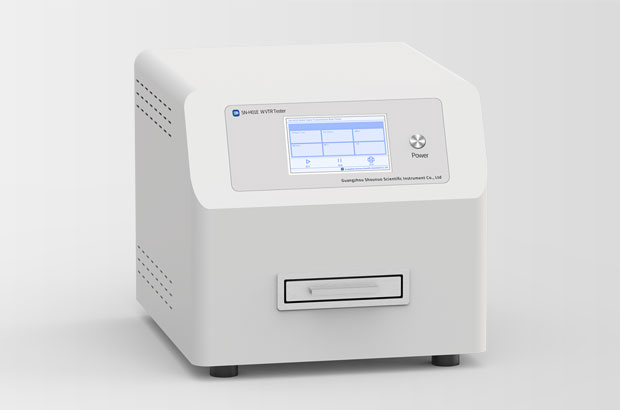
Water Vapor Transmission Rate Tester: Stop Moisture Damage, Extend Shelf Life
31.08.2026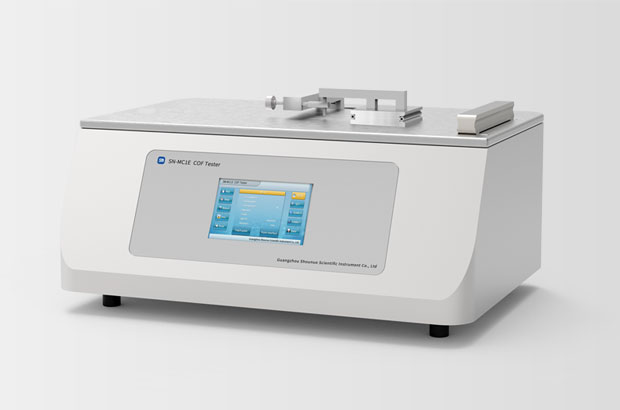
Coefficient of Friction Tester: The Complete Guide to COF Testing for Packaging, Food & Pharma
24.08.2026
Flexible Packaging Compression Testers: Strategic QA for Global Markets
17.08.2026
Melt Flow Index Tester | SN-RR2E for ASTM D1238 & ISO 1133
04.08.2026


