For packaging engineers, quality control specialists, and procurement professionals in the food, pharmaceutical, and medical device industries, few material properties are as critical as oxygen barrier performance. Oxygen ingress is a primary driver of product degradation—oxidation, spoilage, flavor loss, and reduced shelf life all trace back to oxygen exposure. This is why Oxygen Transmission Rate (OTR) testing has become an indispensable part of packaging material evaluation.
Among the various standards available for OTR measurement, ASTM D3985 stands as the most widely adopted method for determining the oxygen transmission rate through plastic films, sheeting, laminates, and coated materials. This article provides a comprehensive overview of ASTM D3985, its testing principles, applications, and what to look for in an Oxygen Transmission Rate Tester.
Oxygen Transmission Rate (OTR) quantifies the volume of oxygen gas that passes through a material of a given area per unit time under specified conditions of temperature and relative humidity. It is typically expressed in units of cm³/(m²·day) or cc/(100 in²·day).
For packaging materials, OTR is a direct measure of barrier effectiveness. A low OTR indicates excellent oxygen barrier properties—essential for products sensitive to oxidation, such as fresh meat, dairy, coffee, snacks, pharmaceuticals, and medical devices. Conversely, a high OTR suggests the material allows significant oxygen passage, which may be suitable for products requiring respiration, such as fresh produce.
ASTM D3985—officially titled "Standard Test Method for Oxygen Gas Transmission Rate Through Plastic Film and Sheeting Using a Coulometric Sensor"—covers a procedure for determining the steady-state rate of oxygen gas transmission through plastics in the form of film, sheeting, laminates, coextrusions, or plastic-coated papers and fabrics.
The standard provides for the determination of three key parameters:
ASTM D3985 is recognized internationally and is harmonized with related standards such as ISO 15105-2 and JIS K7126-B.
The test method relies on a coulometric oxygen sensor, also known as an electrochemical sensor, which provides highly precise and absolute oxygen concentration measurements.
The testing procedure involves the following steps:
It is important to note that ASTM D3985 is designed for testing under dry conditions, with relative humidity maintained below 1%. For OTR measurement under humid conditions, ASTM F1927 is the appropriate standard.
The applications of ASTM D3985 OTR testing span virtually every sector that relies on barrier packaging:
| Industry | Applications |
| Food Packaging | Snack foods, fresh meat, dairy products, coffee, nuts, and ready-to-eat meals |
| Pharmaceuticals | Blister packaging, pouch packaging, and moisture- and oxygen-sensitive drug products |
| Medical Devices | Sterile barrier packaging requiring extended shelf life |
| Electronics | Corrosion-sensitive components and photovoltaic modules |
| Industrial | Chemical packaging and specialty barrier materials |
For packaging engineers and quality professionals, ASTM D3985 OTR data delivers tangible value:
Understanding the distinctions between ASTM OTR test methods is essential for selecting the right approach:
| Standard | Method | Best For |
| ASTM D3985 | Coulometric sensor, dry conditions | Flexible films and laminates, high-barrier materials |
| ASTM F1927 | Coulometric sensor with humidity control | Barrier materials tested under controlled RH |
| ASTM F2622 | Different sensor technology | Medium to high OTR materials |
| ASTM F1307 | Coulometric sensor for packages | Whole package OTR measurement |
ASTM D3985 is specifically optimized for flexible films and provides highly precise measurements, making it the preferred choice for most packaging film applications.
When selecting an Oxygen Transmission Rate Tester for ASTM D3985 compliance, several factors merit consideration:
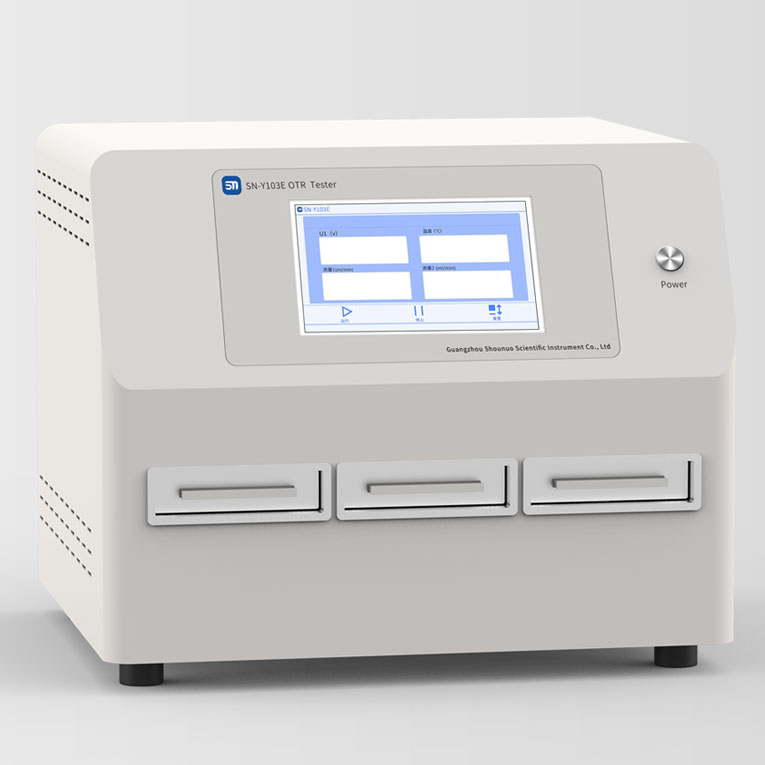
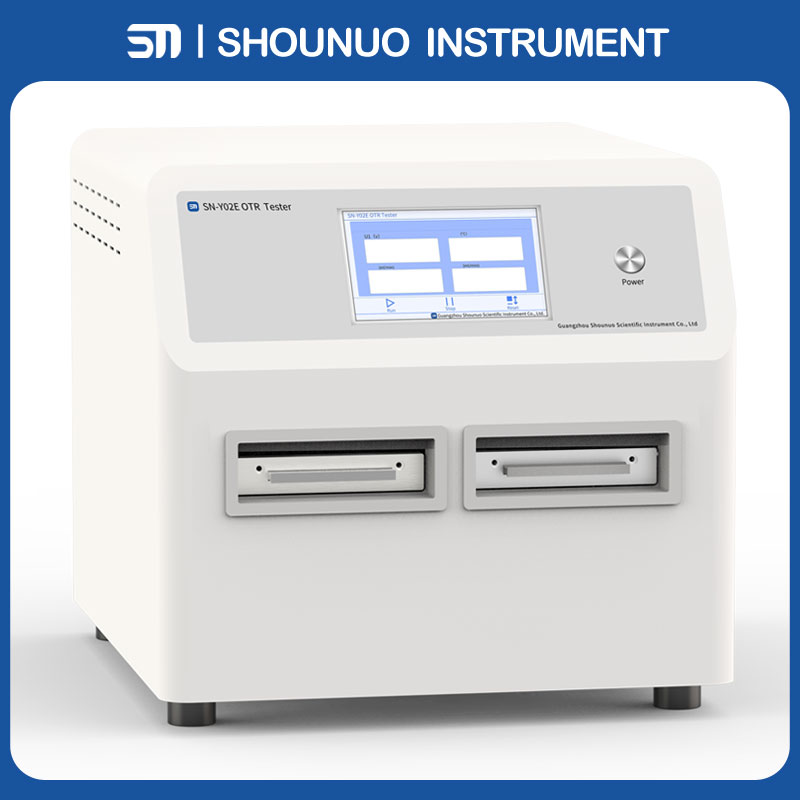
For packaging laboratories seeking reliable ASTM D3985-compliant instrumentation, the SN-Y02E and SN-Y103E Oxygen Transmission Rate Testers from Guangzhou Sunuo Scientific Instrument offer robust solutions.
The SN-Y02E features a dual-chamber design, delivering wide-range OTR detection from 0.005 to 1000 cc/(m²·24h) with an impressive resolution of 0.0001 cm³/(m²·24h). Its high-precision imported oxygen sensor and ±0.5°C temperature control accuracy ensure reliable, repeatable test data. The instrument complies with ASTM D3985, ASTM F1307, and optional ASTM F1927, along with GB/T, DIN, and JIS standards. With optional accessories, it can also measure the oxygen transmission of containers such as bottles, bags, and bowls.
For laboratories requiring higher throughput, the SN-Y103E offers the same technical specifications and ASTM D3985 compliance in a three-chamber configuration, supporting simultaneous testing of up to three specimens. This significantly enhances testing efficiency without compromising the precision and accuracy expected from a professional-grade OTR tester.
Both instruments feature an intelligent operating system with audit trails and multi-level user permissions, meeting GMP computerized systems requirements for data traceability—particularly valuable in pharmaceutical applications.
To obtain accurate and reproducible OTR results, packaging professionals should adhere to these best practices:
ASTM D3985 remains the cornerstone standard for oxygen transmission rate testing of plastic films and packaging materials. For packaging engineers, quality control managers, and procurement professionals, understanding this standard is essential for making informed decisions about material selection, quality assurance, and shelf-life prediction.
The method's coulometric sensor principle delivers the precision and reliability that modern packaging applications demand. Whether evaluating high-barrier films for pharmaceutical blister packaging or optimizing food packaging for extended shelf life, ASTM D3985 provides the quantitative data needed to ensure product protection and consumer safety.
As packaging requirements continue to evolve toward barrier performance and sustainability, the importance of accurate, standardized OTR measurement will only grow. Investing in a capable Oxygen Transmission Rate Tester that fully complies with ASTM D3985 is not just a quality assurance measure—it is a strategic decision that directly impacts product integrity and brand reputation.
For more information on ASTM D3985-compliant OTR testing solutions, including the SN-Y02E (dual-chamber) and SN-Y103E (three-chamber) Oxygen Transmission Rate Testers, visit Guangzhou Sunuo Scientific Instrument or contact their team for technical consultation and product demonstrations.
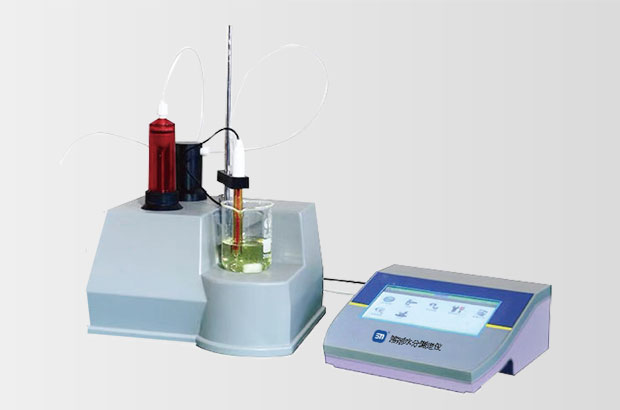
Solvent Moisture Tester: Hidden Moisture Control for Flexible Packaging & Pharma Compliance
07.09.2026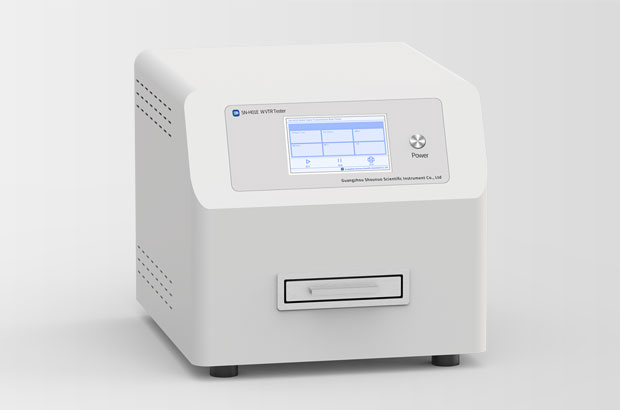
Water Vapor Transmission Rate Tester: Stop Moisture Damage, Extend Shelf Life
31.08.2026
Coefficient of Friction Tester: The Complete Guide to COF Testing for Packaging, Food & Pharma
24.08.2026
Flexible Packaging Compression Testers: Strategic QA for Global Markets
17.08.2026


